





Blog / Chevrolet Service

Maintaining Your Chevy's Suspension System

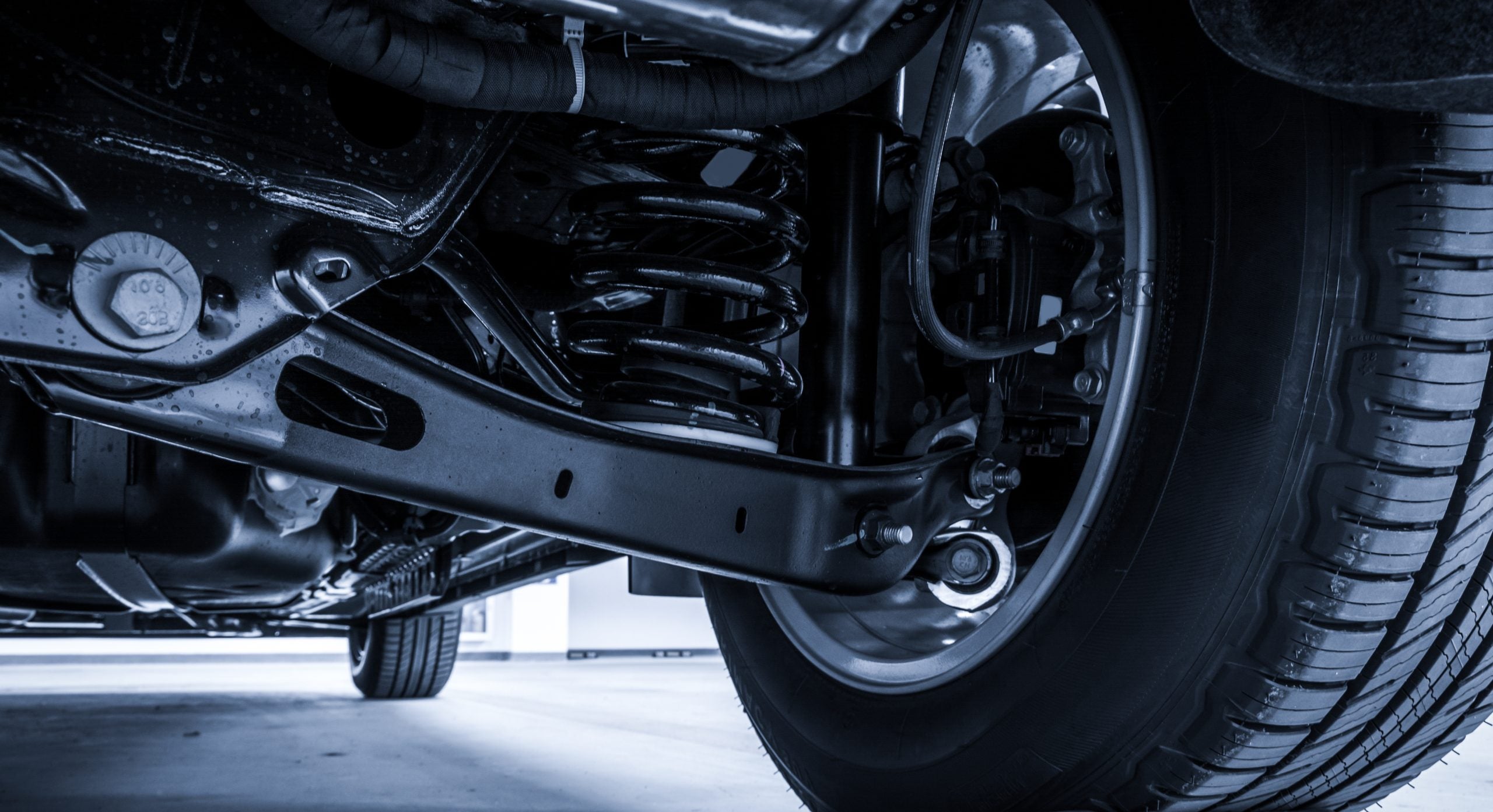
Technical,Photo.,The,Structure,Of,The,Modern,Car.,Rear,Suspension.

Do you ever wonder why your Chevy drives so smoothly? Excellent suspension is the answer; but without regular maintenance, even the best suspension will suffer wear and tear, eventually causing the car to bounce, sway, dip, and become less precise in its overall handling. You can keep your drives easy and smooth with the following Chevy suspension maintenance protocol. 

Maintaining Your Chevy's Suspension System

Keep Your Tires Properly Inflated

When tires aren't at exactly the correct PSI in terms of air pressure, excess strain is placed on the suspension. This pushes the shocks and struts out of shape and also puts you at risk of skids and blowouts. 

Routinely Rotate Your Tires 

Car tires tend to wear down unevenly, a phenomenon easily corrected with regular tire rotations. It's advisable to keep your tires uniform in size and wear patterns with rotations twice a year. This helps your tires last longer and protects your suspension from harm.

Avoid Rougher Roads

Suspension systems are most strained by rougher roads and potholes. The more you can avoid bad roads, the longer your suspension will last. If you do need to use poorly maintained roads a lot, or you're a fan of off-roading, have your suspension and wheel alignment checked and corrected more often.

Realigned Your Wheels 

Over time, car wheels become pushed slightly out of position by continual bumps against potholes and curbs. It's advisable to have your wheel alignment measured at least twice a year. If any of your wheels are found to be out of proper alignment, have them realigned, a process that involves precision machinery and adjustments to the shocks, struts, and springs. 

Clean Your Suspension 

When you clean your car, don't forget to clean thoroughly beneath the undercarriage too. If snow, mud, sand, or general grime builds up on the shocks, struts, control arms, and springs, it accelerates corrosion. 

Repair Suspension Faults Promptly

If you notice signs of worn-out suspension parts, don't hesitate to have the faulty component replaced. A malfunctioning suspension may cause your car to bounce excessively after bumps and dips in the road. You may find the nose dipping forward when you brake or the entire vehicle leaning to the side when you corner. A weakening suspension at just one wheel may also cause the car to lean towards that corner when it's parked. 

Book Chevy Suspension Maintenance

As with any important car part, it's wise to routinely have your suspension inspected by a professional. Once a year is a good interval for most cars. During an inspection, our experienced technicians can check every suspension part and keep you informed of how much longer they're likely to last. Visit Mike Kelly Chevrolet in Butler, PA, today to have your suspension inspected or repaired. For over 60 years, we've been helping drivers enjoy safer, smoother, more enjoyable rides.
Posted in:

Related Posts

chevy exhaust system

Maintaining Your Chevy's Exhaust System

The exhaust system tucked away under your car requires diligent maintenance just like any other vital component. With the following Chevy exhaust maintenance guidelines, you'll help your engine and entire car run more smoothly and efficiently. Clean Your Exhaust Frequently Regular cleans will combat corrosion and reduce the buildup of carbon deposits, which might otherwise restrict the outflow of fumes. Use an old rag, soap, water, degreaser, and polish to clean the outside of the pipes and as far into the tailpipes as possible. Frequent cleans are especially important during our icy Pennsylvanian winters, when snow and salty slush from the road can have a highly corrosive effect. more Protect Your Exhaust From Rust Rust is one of the chief dangers any exhaust can face. Rapidly rising temperatures create condensation inside the exhaust pipes, which encourages rust. Consider applying temperature-resistant paint and rust inhibitors to protect the metal from external corrosion. Also, regularly check your exhaust pipes for rust. If you catch minor rust early and remove it using an effective degreaser with steel wool, you'll save your exhaust pipes from cracks and leaks down the road. Avoid Short Drives of Under Five Miles Internal rust is harder to spot. Your best defense against this threat is regular drives, which generate the heat required to remove internal puddles of moisture. However, it's important to take longer drives, ideally out on the highway. If you only make short trips of under five miles, the heating exhaust will create condensation, which then settles inside the exhaust when you stop driving. If you keep driving for another ten or twenty minutes instead, all the moisture will get thrust out of the tailpipe or evaporated away. Discard Aggressive Driving Habits The rapid accelerating and braking that characterizes aggressive driving has a detrimental impact on exhaust systems. If you adopt calmer driving habits, your exhaust, engine, transmission, and brakes will all suffer less strain and reward you with better long-term performance. Idling is also harsh on the exhaust and should be avoided where possible. Overloading your car by carrying or towing too much weight could also cause premature wear and tear. Book Regular Chevy Exhaust Maintenance Without a trained eye or the ability to safely raise your car, it's difficult to properly inspect an exhaust system. At least once a year, have a trusted technician thoroughly inspect and test the manifolds, catalytic converter, resonator, muffler, oxygen sensors, brackets, and every other exhaust component for cracks, corrosion, looseness, and abnormalities. Any issues can be quickly repaired to keep your exhaust and engine running efficiently. Schedule an exhaust inspection today at Mike Kelly Chevrolet in Butler, PA. Our technicians are Chevrolet experts dedicated to quality work and great customer service.

A dark gray Chevrolet SUV

Chevy Cabin Air Filter Replacement: Importance and Schedule

If your car becomes dusty faster than usual, or if the cabin smells unpleasant with no obvious cause, then it might be time to replace your Chevy cabin air filter.  Changing the filter regularly is vital, as it plays an important role in keeping contaminants out of the car. more What Does Your Chevy Cabin Air Filter Do? Keeps Your Interior Clean Catching dust and dirt is part of your cabin air filter's job. This helps keep those contaminants out of your car, keeping it cleaner. With no dust or dirt buildup, you don't need to wipe down the surfaces to get rid of dust as often, and it helps the interior last longer by keeping it free of things that could damage it. Keeps Contaminants Out Some things that your air filter keeps out can be hazardous. Twigs, rodent droppings, soot, leaves, and insects are just some of the more harmful things that your filter may keep at bay. Different filters are designed to keep different contaminants out of the car, but they all work to keep the interior as contaminant-free as possible. Keeps You Safe and Healthy By keeping contaminants out of the cabin, the air filter doesn't just keep you safe from breathing in harmful and unhealthy substances. It can also keep pollen and other allergens out of the car. Keeping allergens out can improve your safety by reducing symptoms such as blurry vision and sneezing. Dealing with these symptoms while driving can be distracting and make driving more dangerous. How Often Should You Change Your Cabin Air Filter? How often your air filter needs to be changed varies depending on several factors, including how much you drive and the environments you drive in most often. Learning the signs that you need to change the air filter, or asking the technicians at your local dealership for advice, can help you get a good idea of how often you will need to change yours. Your owner's manual may also recommend how often you need to change the air filter. For example, a recommendation from the owner's manual of a 2025 Chevy model says to change the air filter every 36,000 miles or every 24 months. What Happens If You Don't Change Your Cabin Air Filter? Not getting your cabin air filter changed can lead to more dust buildup in your car, weak airflow from the vents, and a bad smell that doesn't go away, no matter how much you clean your cabin. The smell could be mildew or other bacteria in your vents, and your old, clogged filters can't filter it out properly. Visit Mike Kelly Chevrolet in Butler, PA, to get your air filter changed regularly. Coming by for service twice a year is ideal for keeping your car in excellent condition. Image via Chevrolet

A green Chevrolet Equinox

Chevy Oil Change: Importance of Regular Service

Motor oil is like an elixir of youth for your Chevy, keeping the engine lively, powerful, and healthy for its longest possible lifespan. For optimal engine performance and longevity, never miss an oil change. Read on for further guidance on Chevy oil change importance. more How Motor Oil Helps the Engine Oil lubricates the pistons, valves, pushrods, shafts, rocker arms, and several other hard-working engine components. This keeps everything operating smoothly and efficiently, maximizing power output for each gallon of gas burned. In addition, oil acts as a cleaning agent, carrying grime and dust into the oil filter while also preventing the formation of rust and corrosion. It's no overstatement to say that the engine depends completely on oil for healthy, long-term functioning. How Frequently To Change Your Oil You'll find a good outline for your optimal oil change interval in your owner's manual; this figure differs for each model and is affected by driving habits and conditions. Synthetic motor oil usually lasts from 7,500 to 10,000 miles. If you visit us for an oil change twice a year, your oil is unlikely to have time to wear down and degrade. Does Your Oil Need More Frequent Changes? As you'll see in your manual, motor oil should be changed more frequently when the driver puts their engine under more strain than normal. Driving along exceptionally dusty, dirty, or sandy roads, such as occurs when off-roading or using bare farm tracks, will wear the oil down faster. Taking regular short trips of under five miles also causes oil to deteriorate more rapidly, as does towing heavy trailers or daily commutes in stop-and-go traffic. Take these factors into consideration when calculating how often to change your oil. One of our technicians can help you figure out the optimal interval. Signs of Low or Aging Motor Oil When oil gets too low or goes bad and cannot lubricate properly, the engine will soon show signs of struggle. You might hear knocking or excessive rumbling and feel odd vibrations as insufficiently lubricated metal parts rub roughly against each other. The engine may lose power and cause smoke to emerge from the exhaust system. If you check the oil, you'll see that it's low and dirty looking. Never hesitate to top up or flush your motor oil if you experience these issues. Visit Mike Kelly Chevrolet in But l er, PA, to have your oil changed today. We offer comprehensive maintenance services and are happy to arrange convenient and personalized car servicing schedules for all our regular customers. Proactive maintenance is the key to a youthful, long-lived vehicle. Image via Chevrolet